Radar Signal
Our Read on FILA’s New Southeast Asian Retail Format
FILA has expanded its Malaysian footprint with four new stores across key commercial areas, including Kuala Lumpur and Penang.
Neverlater Radar / August 13, 2026
Shape your Neverlater
Radar Signal
FILA has expanded its Malaysian footprint with four new stores across key commercial areas, including Kuala Lumpur and Penang.
Neverlater Radar / August 13, 2026
Shape your Neverlater
Follow the topics behind this signal
Following immediately improves For You, Daily Brief, and Notifications.

Signal
FILA has expanded its Malaysian footprint with four new stores across key commercial areas, including Kuala Lumpur and Penang.
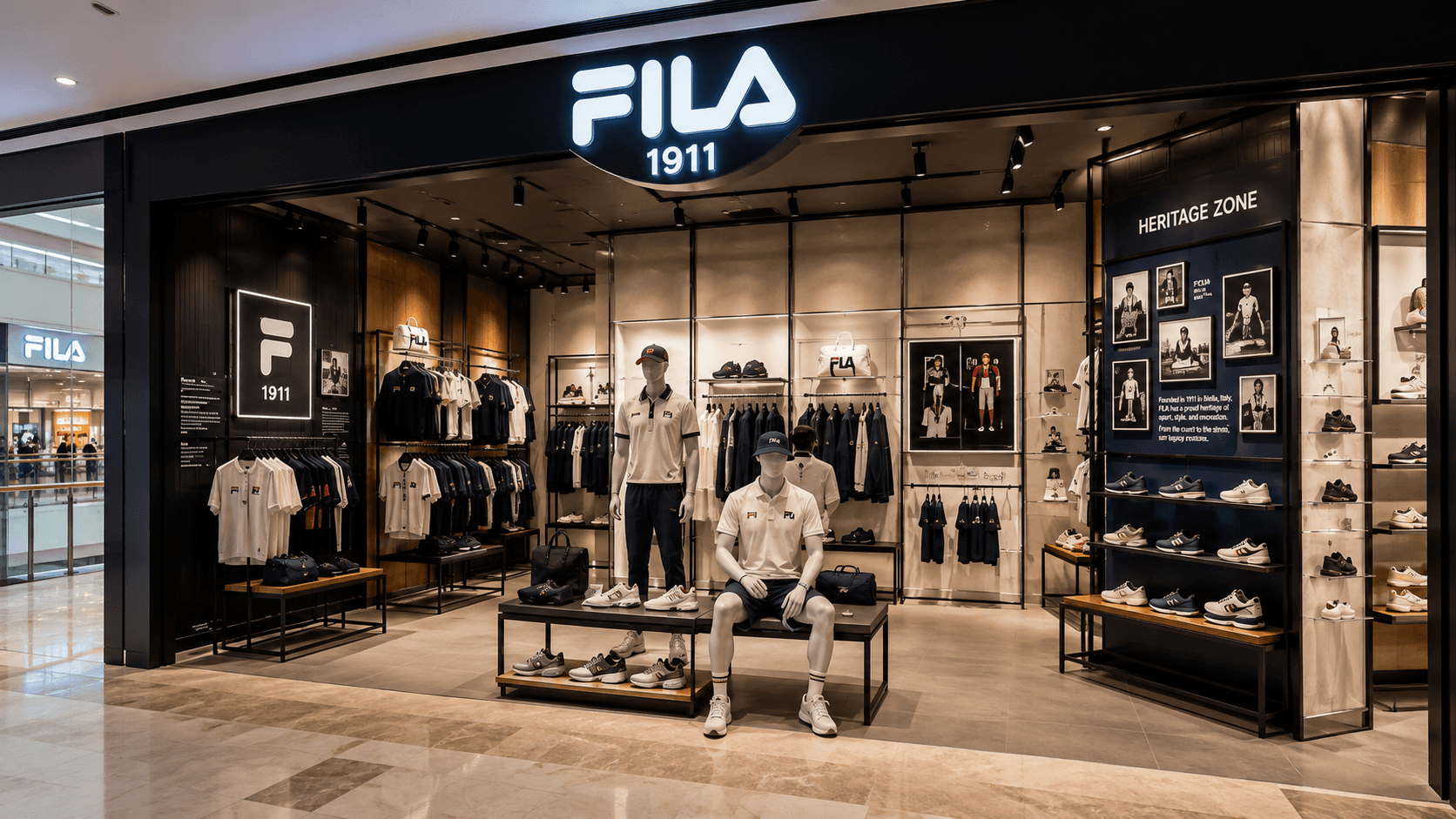
The most interesting opening is at Gurney Plaza.
It is Southeast Asia’s first FILA 1911 Store, a new retail format combining FILA’s lifestyle and performance collections with a dedicated Heritage Zone built around the company’s sporting history.
The signal is therefore bigger than four additional doors.
FILA is experimenting with how physical retail can help reinterpret a century-old brand for a new generation of Asian consumers.
Why it matters
FILA does not need more awareness.
The brand already has more than a century of history. The harder challenge isrelevance.
The competitive landscape has become substantially more segmented.
Running brands own technical credibility.
Athleisure brands own lifestyle.
Outdoor brands are moving into fashion.
Why us, now?
Neverlater read
Our view: FILA should not try to behave like a young challenger brand. Its opportunity is to make the history it already owns useful again.
A Heritage Zone can tell a strong story.
But consumers do not repeatedly buy museum exhibits.
The strongest legacy brands make consumers feel the history through the product.
They do not simply explain it.
A materially different store can change perception faster than another advertising campaign.
The consumer walks in expecting one version of FILA and sees another.
That is valuable.
A beautiful store is only successful if it creates a better business.
One danger for established brands is becoming overly reactive.
What to watch next
Which Southeast Asian market receives the FILA 1911 concept next, and how aggressively does FILA scale it beyond Malaysia?
Indonesia would be a substantially larger but more competitive test of whether the new format can translate across markets.
Do FILA 1911 locations outperform conventional FILA stores on traffic, conversion, basket size, and full-price sell-through?
Can heritage genuinely improve relevance among younger consumers rather than simply appealing to existing FILA customers?
Does the 1911 concept eventually influence the merchandise itself, or remain primarily a store-design treatment?
Can local creators, athletes, designers, or communities make the format more culturally relevant without diluting FILA’s global identity?

References
Sources used to support this Neverlater read.
Running becomes popular, so everyone becomes a running company.
Performance grows, so everyone becomes technical.
Athleisure expands, so everyone adopts the same visual language.
That usually leads to weaker differentiation.
a real archive.
The opportunity is to use that archive as a source of contemporary product relevance rather than nostalgia.
Southeast Asia is young, mall-oriented, internationally connected and increasingly sophisticated about fashion and sport.
That makes Malaysia a useful environment to test a new retail expression before expanding it further across the region.
Indonesia becomes particularly interesting if the format eventually enters the market.
The scale is larger.
But so is the competitive intensity.
Legacy brands do not always need a new identity.
Sometimes they need a much better way to express the identity they already own.
FILA 1911 is worth watching because it tests whether physical retail can become that bridge.
Discussion
No approved comments yet. Add the first thoughtful note.