App-only / Note
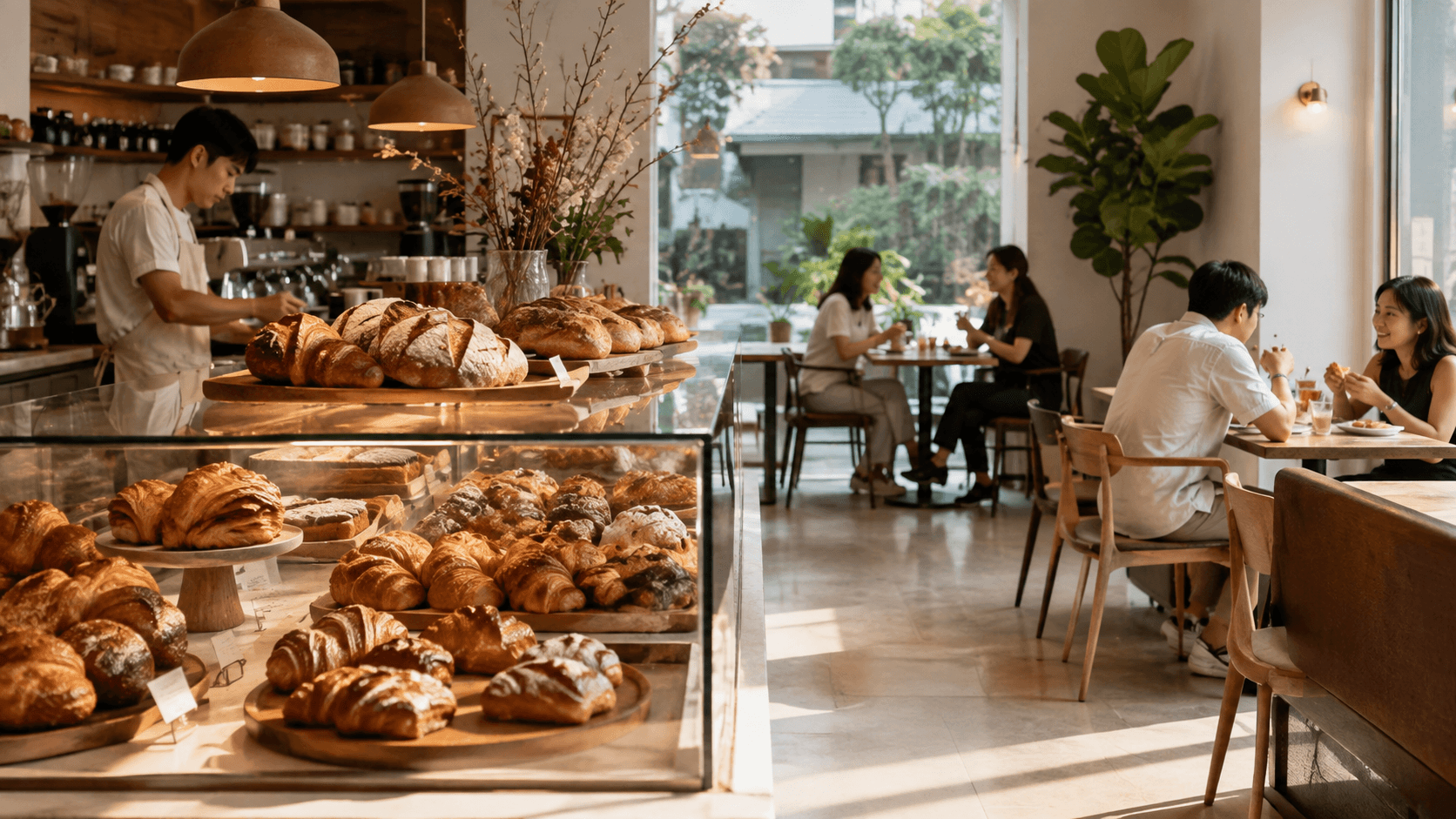
Tiong Bahru Bakery has opened its first Indonesian store at Summarecon Mall Kelapa Gading 3 in Jakarta. The Singapore-born bakery is bringing the products people already know it for: croissants, sourdough, pastries and coffee. But its Indonesian positioning is also deliberately community-led. The company describes the Jakarta store as a place to gather, work and collaborate, not simply somewhere to buy bread. That makes the real question less about whether Jakarta likes croissants. It clearly does. The harder question is: Can Tiong Bahru Bakery turn destination traffic into everyday habit?
Neverlater
August 25, 2026
Shape your Neverlater
Follow the topics behind this signal
Following immediately improves For You, Daily Brief, and Notifications.
App-only note
Jakarta has become increasingly sophisticated about bakery.
That makes Tiong Bahru Bakery’s entry logical.
But it also means the market is no longer empty.
The brand is entering an environment with excellent local bakeries, cafés and international concepts already competing for the same premium urban consumer.
The Singapore name creates curiosity.
It does not guarantee frequency.
Tiong Bahru Bakery started in 2012 in Singapore’s Tiong Bahru neighbourhood and has since expanded across multiple parts of the city. Its official locations page now shows a broad network spanning central Singapore, residential areas and major malls.
That history matters.
The original appeal was never just pastry.
product + place + routine.
That is much harder to replicate than a croissant recipe.
The first Indonesian location sits inside Summarecon Mall Kelapa Gading.
But it also changes the context.
A neighbourhood bakery can naturally become part of a morning ritual.
A mall bakery has to work harder to create the same frequency.
This makes the choice of future formats important.
Does TBB remain primarily mall-based?
The answer could materially change the brand’s role in Jakarta.
TBB Indonesia has explicitly positioned the store as a community space for gathering, working and local collaboration.
We like that ambition.
But community can become an overused word in F&B.
What behaviour does the community strategy actually create?
If yes, community becomes a commercial advantage.
If not, it remains marketing language.
Croissants create desire.
Bread can create routine.
Coffee can create frequency.
Meals can increase ticket size.
breakfast → coffee → lunch → afternoon snack → take-home bread.
TBB already has the product architecture to attempt this.
Its Singapore business has also added digital ordering, pickup, delivery and a loyalty layer through the TBB app and Crumb Club.
That infrastructure could become important in Indonesia if the brand wants to move from destination to habit.
The Jakarta store has introduced Indonesia-specific items alongside the core TBB range. Local reporting says the opening assortment includes more than 50 bakery items and exclusive Indonesian menu elements.
We think the right localisation strategy is subtle.
TBB should not become an “Indonesian bakery.”
It should remain Tiong Bahru Bakery.
But local products, collaborations and community programming can make the brand feel more connected to Jakarta rather than simply transplanted from Singapore.
The distinction is important.
Premium bakery has attractive consumer economics when the product becomes habitual.
But if the customer treats the store primarily as an occasional indulgence, the addressable frequency becomes much lower.
The opening queue is a brand metric.
Repeat purchase is the business metric.
Our view: Tiong Bahru Bakery’s biggest opportunity in Indonesia is not becoming Jakarta’s most famous croissant.
It is becoming useful enough to enter people’s routines.
The Singapore brand gives it the first visit.
Beautiful stores give it social relevance.
Great pastry gives it product credibility.
But the strongest version of TBB Indonesia is one where customers eventually stop thinking of it as a Singapore import.
their bakery.
That transition from destination to habit is what we would watch most closely.
Do customers return regularly after opening curiosity fades?
Can TBB become part of breakfast and coffee routines rather than primarily weekend mall visits?
Does the brand eventually experiment beyond malls?
Which categories create the most repeat behaviour: pastries, bread, coffee or meals?
Can Jakarta-specific products deepen relevance without weakening the brand’s Singapore identity?
Does Indonesia eventually adopt pickup, delivery and loyalty infrastructure similar to Singapore?
Can collaborations and local events create measurable customer frequency rather than simply social content?
References
Sources used to support this Neverlater read.

Discussion
No approved comments yet. Be the first to add a thoughtful note.