
App-only / Note
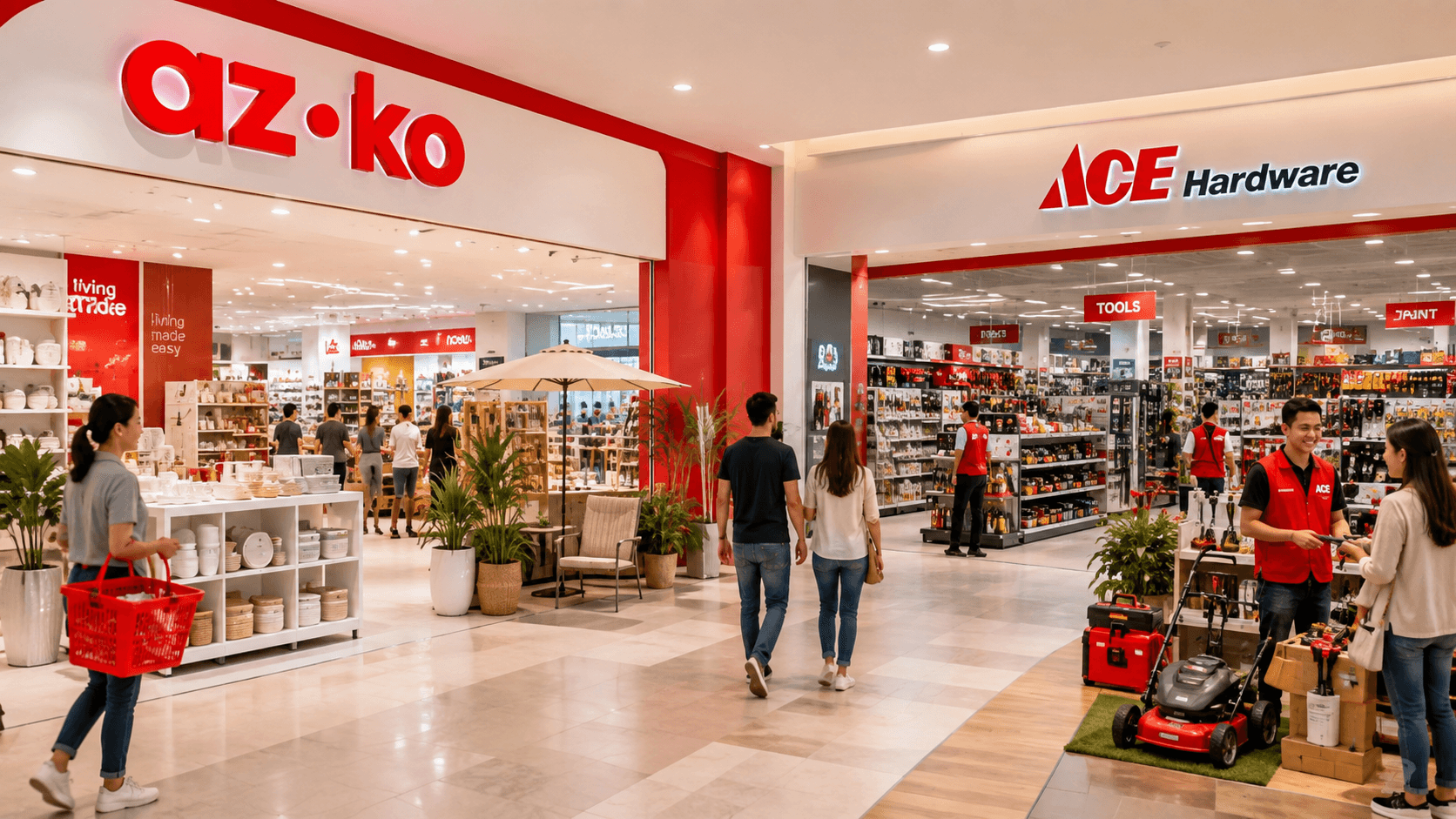
For almost three decades, Indonesian consumers knew one name for large-format home-improvement retail: ACE Hardware. Then the relationship between ACE and its long-time Indonesian operator ended. PT Aspirasi Hidup Indonesia transitioned the existing network into AZKO in early 2025. Now ACE is back. Starting July 29, 2026, the brand officially returned to Indonesia under a new operator, MAP Group. MAP initially planned a cautious rollout of around 5–7 stores, while AZKO already operates 276 stores across 97 cities. That creates one of Indonesia’s most interesting retail experiments. What exactly was the customer loyal to? The ACE name? The stores? The assortment? The private brands? The locations? The membership? Or the operating system behind all of them?
Neverlater
August 22, 2026
Shape your Neverlater
Follow the topics behind this signal
Following immediately improves For You, Daily Brief, and Notifications.
App-only note
This is what makes the situation unusual.
Consumers typically experience a retailer as one entity.
brand owner → licence → local operator → procurement → distribution → locations → staff.
They just see the store.
For decades, ACE Hardware in Indonesia was operated by the company now known as PT Aspirasi Hidup Indonesia.
That relationship ended at the end of 2024.
The existing network did not disappear.
The operator, stores, supply infrastructure and customer relationships remained, but the stores were converted into AZKO.
Now the original international brand has returned through MAP.
For the first time, Indonesian consumers can begin separating the two.
physical density.
By August 2026, AHI had expanded the network to 276 AZKO stores across 97 cities.
The company also reported H1 2026 net sales of Rp4.5 trillion, up 6.3% YoY, while operating profit rose 32.3% and attributable net profit increased 33.3%. Same-store sales grew 2.2%.
More importantly, the infrastructure behind those stores stayed with AHI.
as part of AZKO’s broader operating ecosystem.
That matters.
A retail brand is visible.
Retail infrastructure is usually not.
decades of customer memory.
The brand operated in Indonesia from 1996 until the licence ended in 2024.
That means a large group of Indonesian consumers still understands what “ACE Hardware” stands for without needing much explanation.
Home improvement.
Tools.
Household products.
DIY.
That mental availability has value.
MAP is also integrating ACE with MAPCLUB, giving the returning brand immediate access to an established loyalty ecosystem. ACE’s Indonesian site confirms the brand officially returned on July 29, 2026 and is available through MAPCLUB.
So ACE is not returning completely from zero.
It brings global brand recognition.
MAP brings local retail capability.
The question is how quickly that combination can rebuild physical relevance.
MAP has explicitly said it does not intend to expand ACE aggressively at first.
Management indicated an initial 5–7 stores, with faster expansion only after it has better visibility on profitability.
We like that approach.
Home improvement is not simply another fashion or F&B concept.
MAP is an exceptional lifestyle retailer.
But this category is still relatively new for the group.
How quickly can we reach 100 stores?
What does one good ACE Hardware store look like economically under MAP?
This is where the competition becomes more interesting.
AZKO did not only inherit stores.
It also retained access to a broad assortment of home and lifestyle products, including brands such as KRISBOW, KRIS, KLAZ, STORA, SOLEIL and OTTO KLASSE.
ACE under MAP will need to build its own assortment architecture for Indonesia.
Brand memory gets consumers through the door.
Assortment determines whether they buy.
The most interesting part of this story is bigger than ACE or AZKO.
It asks a fundamental question about licensed retail.
When a global brand is operated locally for decades, who creates the value?
For years, those capabilities are bundled together.
ACE versus AZKO finally separates them.
Our view: neither ACE nor AZKO should assume that historical customer loyalty automatically belongs to them.
AZKO has inherited the infrastructure.
ACE has retained the brand memory.
But both now need to earn the customer again.
That is what makes this competition unusually clean.
Over the next few years, we may get a rare answer to one of retail’s most interesting questions:
Was the value in the name above the store, or in everything happening behind it?
The answer is probably both.
What matters is which side rebuilds the missing half faster.
Can MAP establish attractive economics in its first few stores before accelerating expansion?
Does AZKO continue growing mature-store sales now that the transition period is behind it?
How different do ACE and AZKO eventually become once consumers can compare both stores directly?
Do former ACE customers remain with AZKO, return to ACE, or simply use both depending on the shopping mission?
Can proprietary products become a stronger moat for either retailer?
How aggressively does ACE expand once MAP understands the economics, and how does AZKO respond?
Can MAPCLUB and ruparupa become meaningful differentiators rather than simply supporting channels?
Discussion
No approved comments yet. Be the first to add a thoughtful note.