Radar Signal
Blank Street Raises US$105M as Its Ambition Expands Beyond Coffee
Blank Street has secured US$75 million in fresh primary capital from investors including General Atlantic.
Neverlater Radar / August 27, 2026
Shape your Neverlater
Radar Signal
Blank Street has secured US$75 million in fresh primary capital from investors including General Atlantic.
Neverlater Radar / August 27, 2026
Shape your Neverlater
Follow the topics behind this signal
Following immediately improves For You, Daily Brief, and Notifications.

Signal
Blank Street has secured US$75 million in fresh primary capital from investors including General Atlantic. Axios reported that the broader transaction totals approximately US$105 million, including US$30 million of secondary share sales. The latest round values Blank Street at roughly US$650 million.
The company now operates more than 100 stores, concentrated primarily in New York and London, and has started expanding onto the US West Coast. Its first Los Angeles location opened in Studio City, with additional California locations planned.
But the more interesting signal sits inside the menu.
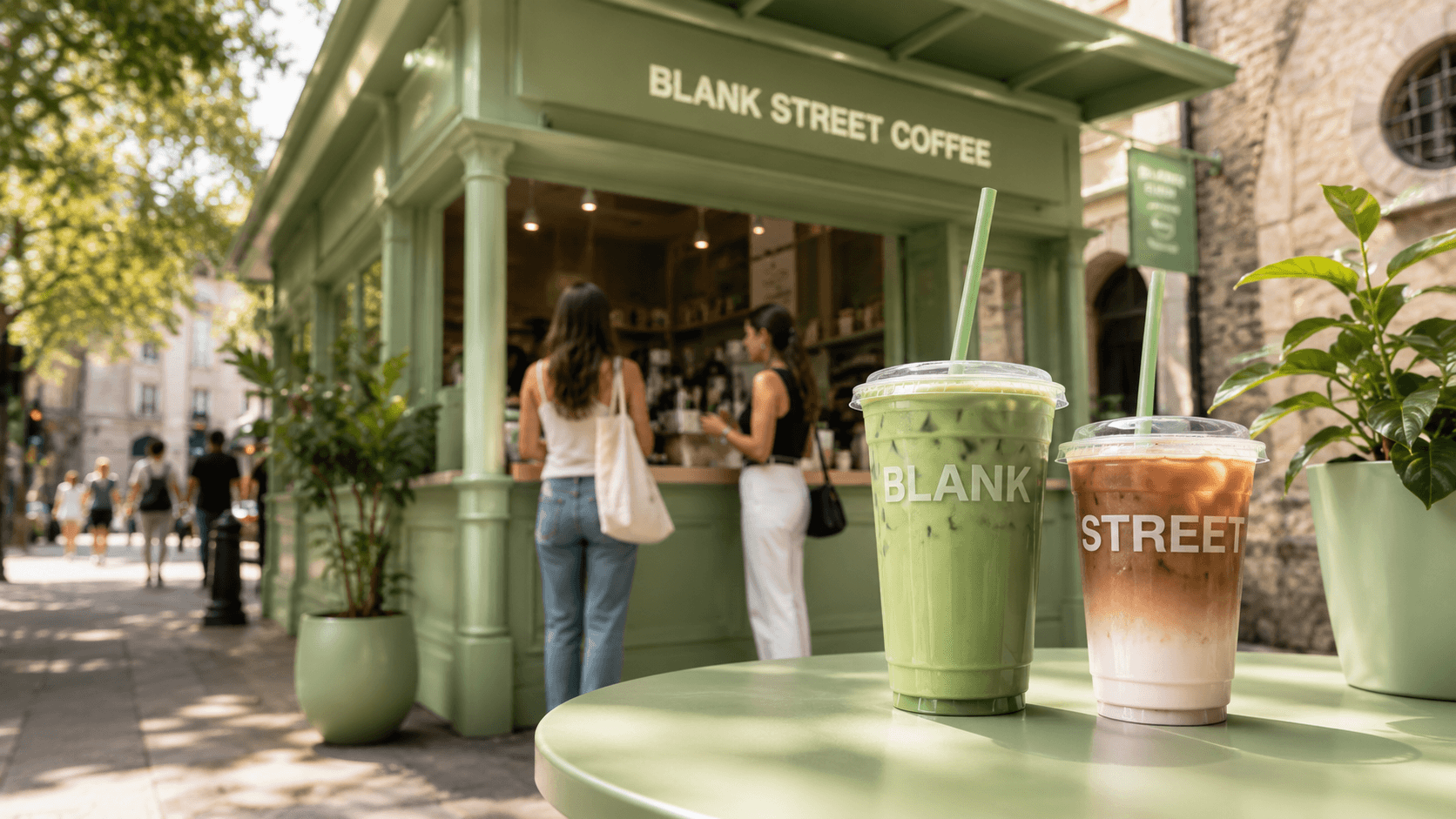
Matcha has become increasingly important to the business. Management is also pushing further into afternoon demand and experimenting with additional categories including ice cream. Blank Street co-founder Issam Freiha described the ambition as building a broader “daily luxury” brand that can serve different moments throughout the day.
Why it matters
Blank Street originally became interesting because its proposition was unusually focused.
Small-format stores.
Relatively simple beverage operations.
High throughput.
Technology-enabled workflows.
And a product consumers already buy frequently.
The latest expansion suggests Blank Street is moving from optimizing the coffee shop toward optimizing the entire daypart opportunity inside each store.
That changes the growth equation.
If existing stores can generate meaningfully more afternoon and evening demand, Blank Street may improve store productivity without relying entirely on opening more locations.
But every new occasion also introduces more inventory, preparation, training, equipment, forecasting, and potential waste.

Neverlater read
The funding itself is not the most interesting part.
The bigger story is that Blank Street appears to be entering a new strategic phase.
The first Blank Street thesis was largely about building a more efficient coffee shop.
The next may be about extracting more consumer occasions from every box already built.
That is potentially powerful.
Can Blank Street grow revenue per store faster than complexity per store?
If the answer is yes, the model becomes considerably more interesting.
If not, the company risks slowly rebuilding the operational complexity its original format was designed to avoid.
What to watch next
Whether afternoon and non-coffee occasions materially improve productivity rather than simply shifting existing demand.
Whether broader menus require materially more labour, equipment, inventory and operating attention.
Whether Blank Street’s density-led playbook works in a more geographically dispersed market.
Whether consumers accept Blank Street as a broader everyday treat brand rather than primarily a coffee-and-matcha chain.
References
Sources used to support this Neverlater read.
Discussion
No approved comments yet. Add the first thoughtful note.