
App-only / Note
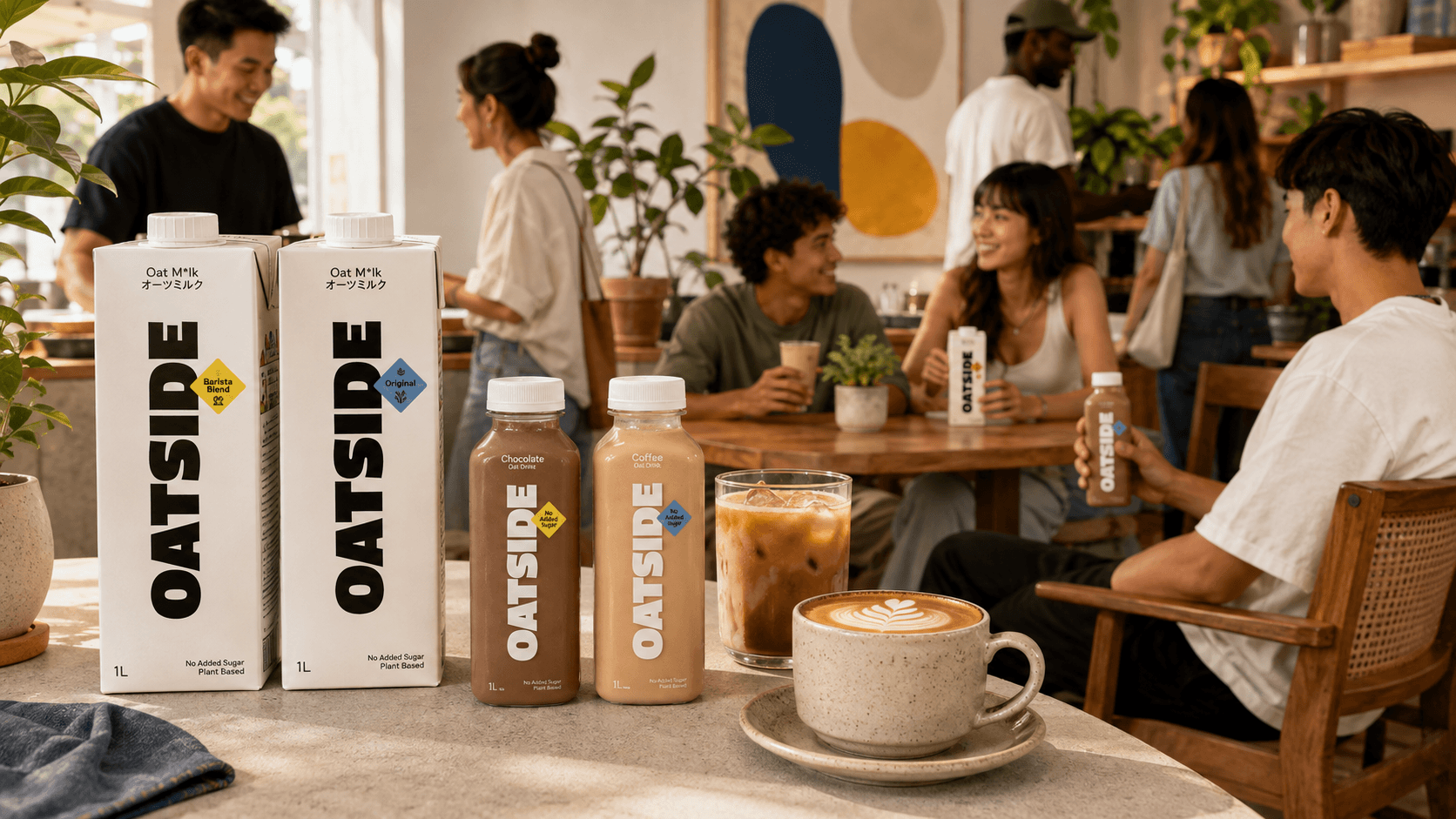
OATSIDE has already done something difficult. It made oat milk feel culturally relevant in Asia rather than simply importing a Western plant-based category narrative. Now the business is entering a different phase. DealStreetAsia reported that OATSIDE roughly doubled revenue in 2024, while losses widened as the company invested more heavily in expansion. Its portfolio is also expanding beyond the original Barista Blend into products including Chocolate, Oat Latte, Mocha, Caramel Macchiato, Chocolate Malt and protein variants. We have already written about what brands can learn from OATSIDE’s brand-building playbook. This time, the question is different: What gets harder after the brand breaks through?
Neverlater
August 20, 2026
Shape your Neverlater
Follow the topics behind this signal
Following immediately improves For You, Daily Brief, and Notifications.
App-only note
OATSIDE’s early success was relatively easy to understand.
It built a memorable brand.
The packaging was distinctive.
The tone was playful.
The product was designed to work well in coffee.
And cafés became an effective discovery channel.
That combination helped OATSIDE become much more than another alternative-milk product.
But consumer brands eventually reach a point where awareness is no longer the main constraint.
The next stage becomes operational.
How do you turn brand heat into a larger, more durable business?
Barista Blend gave OATSIDE a strong entry point.
Coffee shops were an excellent environment for trial because consumers could experience the product inside a familiar drink before buying a carton themselves.
But the company now offers a much broader portfolio.
Its international range includes Chocolate, Oat Latte, Mocha, Caramel Macchiato, Chocolate Malt, Protein Chocolate and Protein Vanilla alongside Barista Blend.
That creates opportunity.
It also creates risk.
Every adjacent SKU can do one of two things: increase the number of occasions OATSIDE owns
or: add complexity without adding enough incremental demand.
That distinction matters.
Cafés gave OATSIDE something unusually valuable.
Third-party endorsement.
If a consumer likes a latte made with OATSIDE, the café effectively becomes the product demo.
But scaling grocery is different.
Shelf competition is higher.
Consumers compare price directly.
Promotions matter more.
Retailers care about turns.
And OATSIDE increasingly has to compete not just against other oat-milk brands but against dairy, soy, almond and retailer-owned alternatives.
The capability required to win cafés is not identical to the capability required to dominate supermarket shelves.
DealStreetAsia reported that OATSIDE roughly doubled its revenue in 2024, while losses widened as expansion costs increased.
That is not inherently negative.
But the next phase requires something more.
Eventually, revenue has to compound faster than the infrastructure supporting it.
That is when growth starts becoming operating leverage.
At small scale, consumers mostly see the brand.
At larger scale, the less visible capabilities become increasingly important.
These capabilities are not as shareable on Instagram.
But they increasingly determine whether the business can scale profitably.
A great consumer brand without a great supply chain eventually becomes constrained by its own success.
The broader portfolio suggests OATSIDE is moving beyond one use case.
Barista Blend is primarily associated with coffee and café usage.
Chocolate creates another occasion.
Ready-to-drink coffee creates another.
Protein extends into wellness.
This is strategically important.
frequency × occasions × channels
without losing brand clarity.
The risk is stretching too far.
OATSIDE still needs to mean something specific.
This may be the most subtle challenge.
OATSIDE gained attention partly because it did not behave like a large FMCG company.
It felt playful.
Specific.
Slightly strange.
Very recognisable.
Scale tends to push brands toward safer decisions.
More markets.
More stakeholders.
More SKUs.
More approval layers.
The danger is that the operating system gets stronger while the brand gets less interesting.
That trade-off needs to be managed carefully.
Our view: building the brand was OATSIDE’s first challenge. Turning that brand into a broader, increasingly profitable consumer platform is the next one.
The questions are changing.
Can people discover and love OATSIDE?
toward:
Can OATSIDE own more occasions, expand distribution, improve manufacturing leverage and do all of that without losing the distinctiveness that created demand in the first place?
That is what makes the next phase more interesting than the first.
Do new products create genuinely incremental consumption occasions, or mostly shift demand between OATSIDE SKUs?
Can OATSIDE become as strong in take-home retail as it became inside cafés?
As revenue grows, does higher production utilisation begin translating into better economics?
Can the company support more markets without distribution and logistics costs growing just as quickly?
Does OATSIDE retain the personality that helped it break through as the organisation becomes larger and more institutional?
Indonesia’s Role
Does Indonesia become one of OATSIDE’s deeper category-leadership markets rather than simply another market where the product is available?
How far can OATSIDE stretch into ready-to-drink, protein and adjacent beverage occasions before the proposition becomes too broad?
References
Sources used to support this Neverlater read.
Discussion
No approved comments yet. Be the first to add a thoughtful note.